Mission Control: Operator-First Drone (No-Code) HMI
OVERVIEW

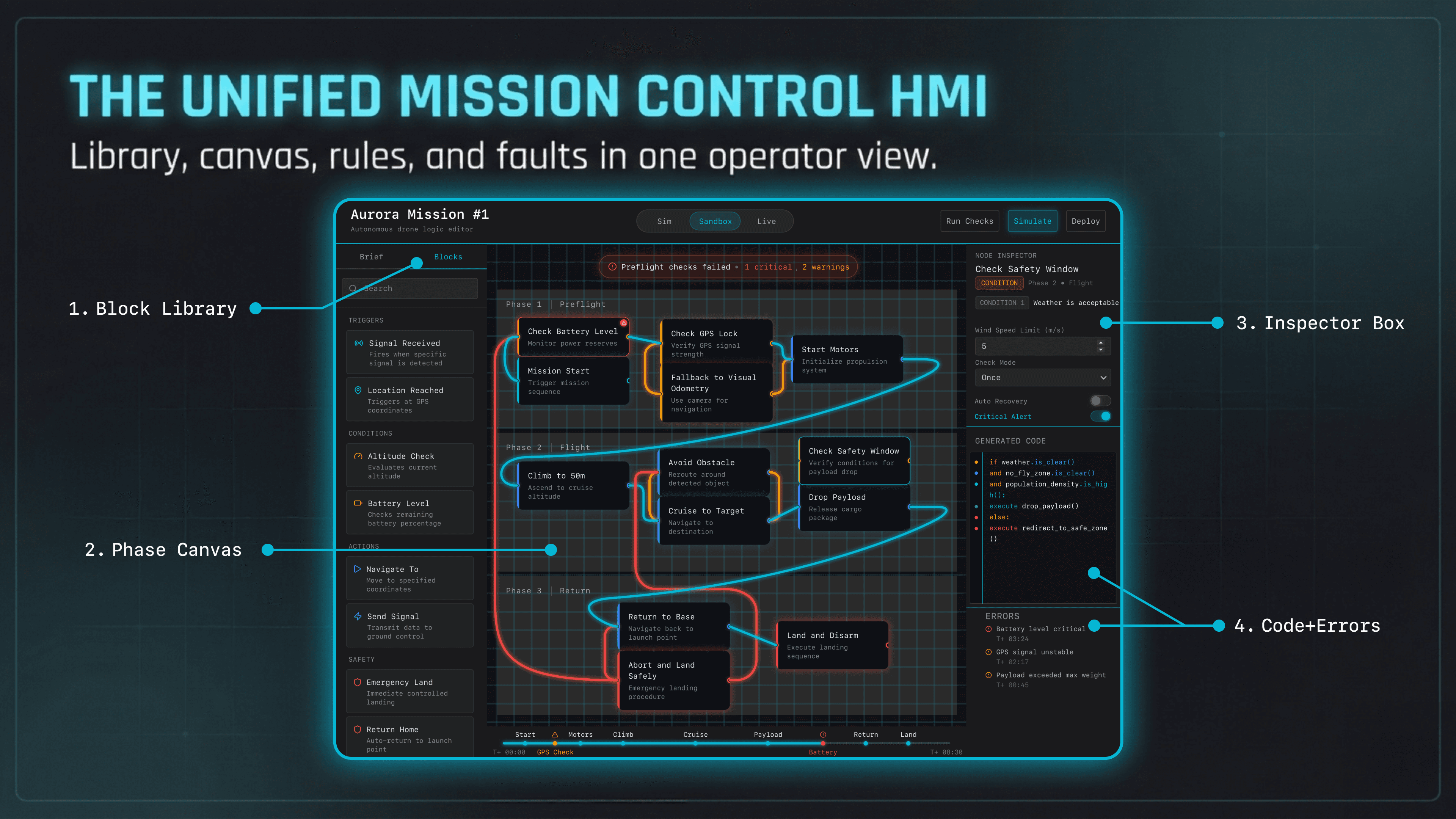
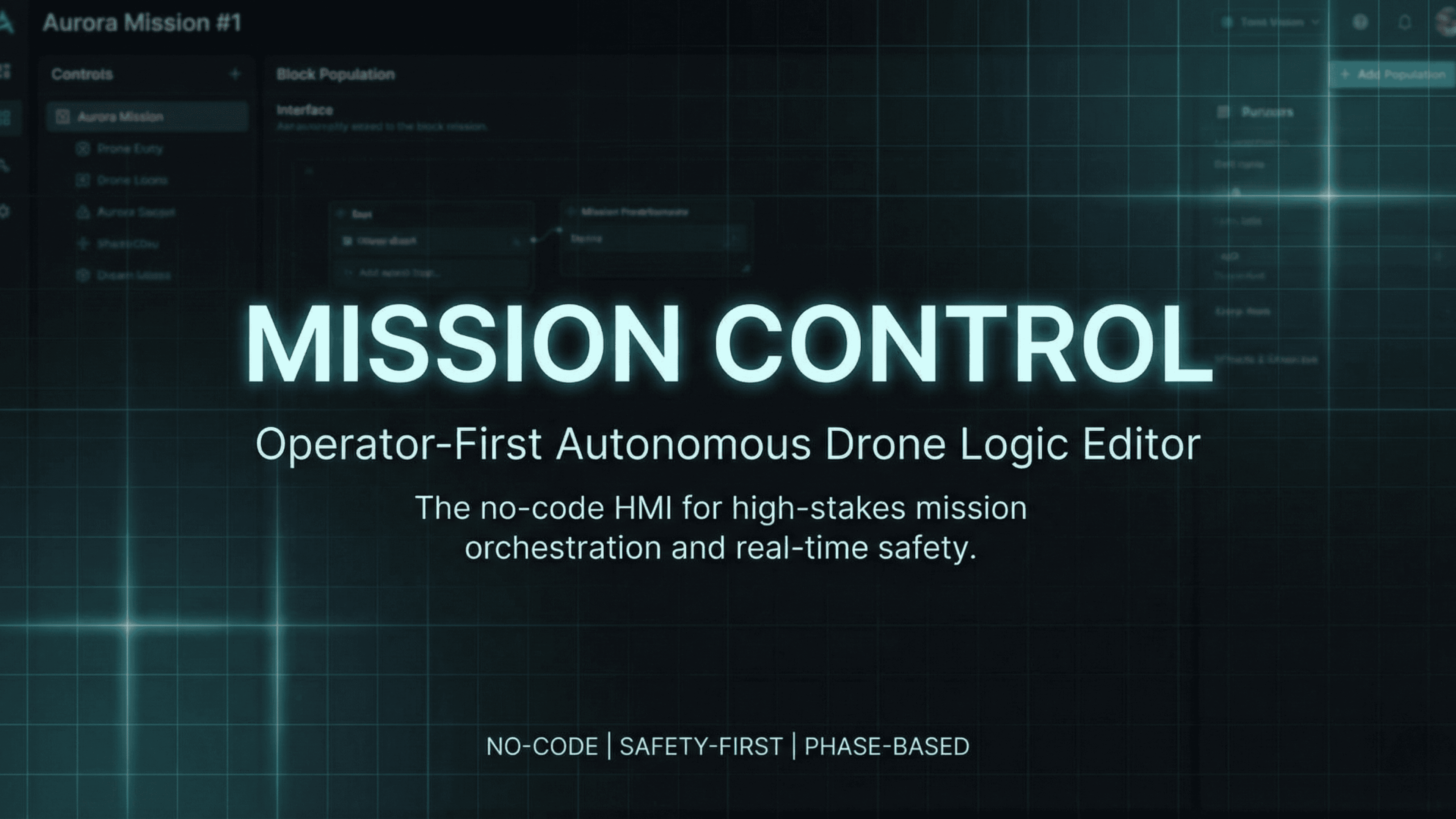
Mission Control is a high-stakes, operator-first Human Machine Interface for planning and validating autonomous drone missions without writing code. It turns complex mission logic into a phase-based visual flow (Preflight, Flight, Return), where safety risks are visible instantly through color-coded paths. The system pairs visual orchestration with inspector-built rules, real-time error surfacing, and a glass-box view of generated code for auditability.

YEAR

2025

ROLE

  • HMI and UI/UX Designer (End-to-end)

  • Owned information architecture

  • Interaction design

  • Visual system

  • Safety-first logic patterns

  • Component styling

  • high-fidelity UI screens for the mission orchestration dashboard.

SERVICES

  • HMI Design

  • UI/UX Design

  • Interaction Design

  • Information Architecture

  • Design System and Components

  • High-Fidelity Prototyping

About the project

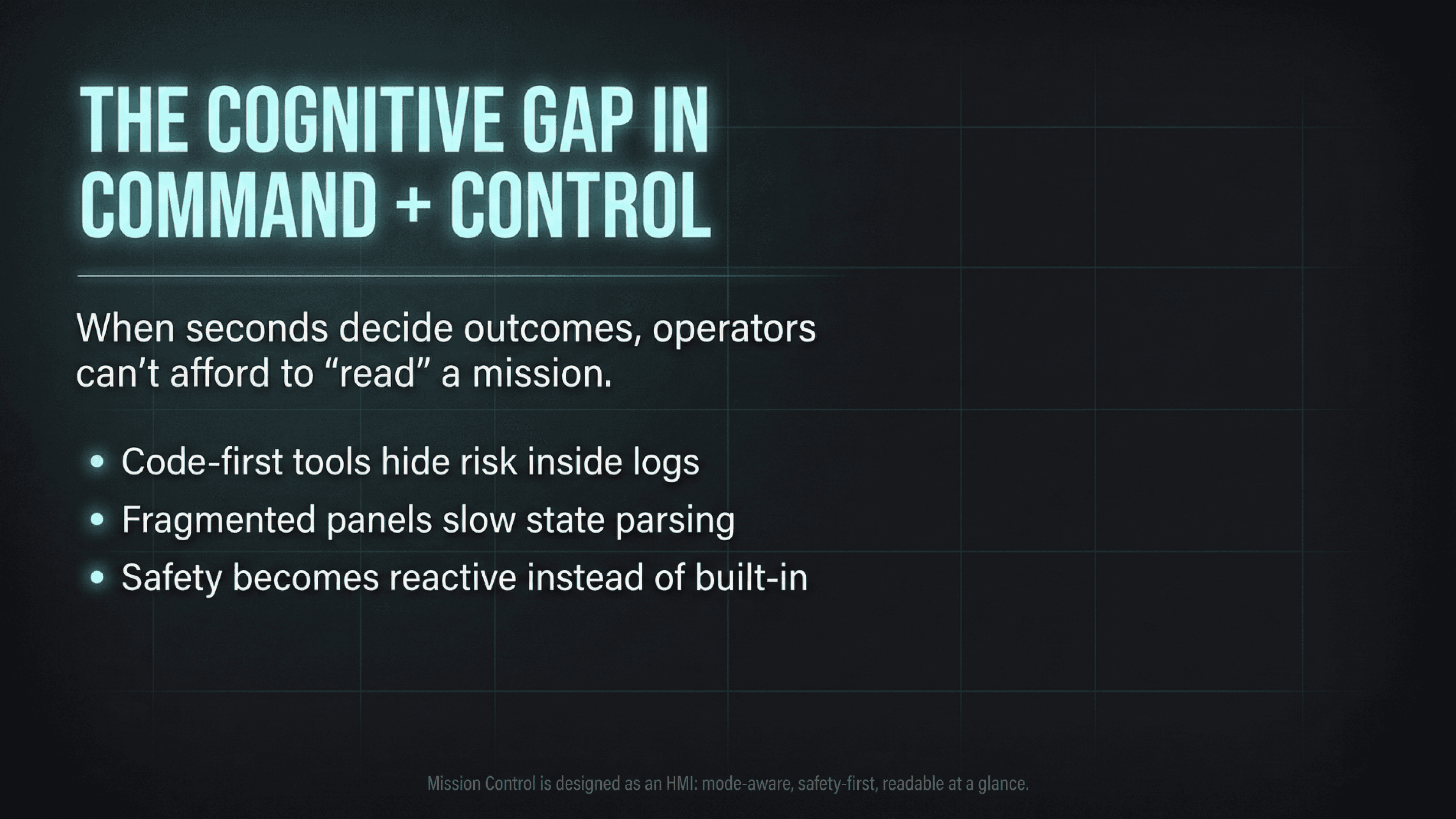
Mission Control is designed for environments where seconds matter and failure cannot be hidden in logs. Traditional code-first mission tools increase cognitive load by forcing operators to read syntax, switch panels, and hunt for failures under pressure.

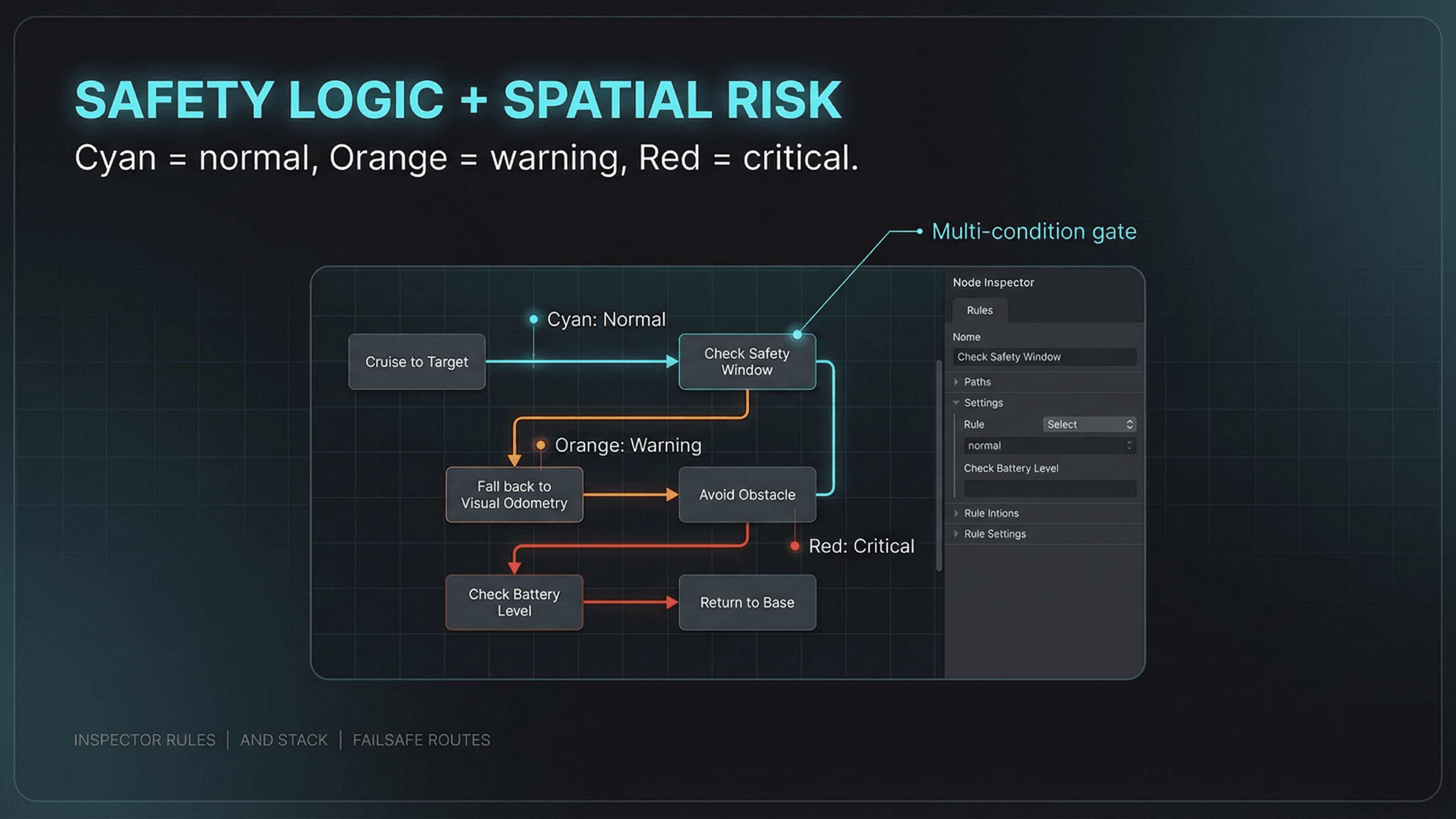
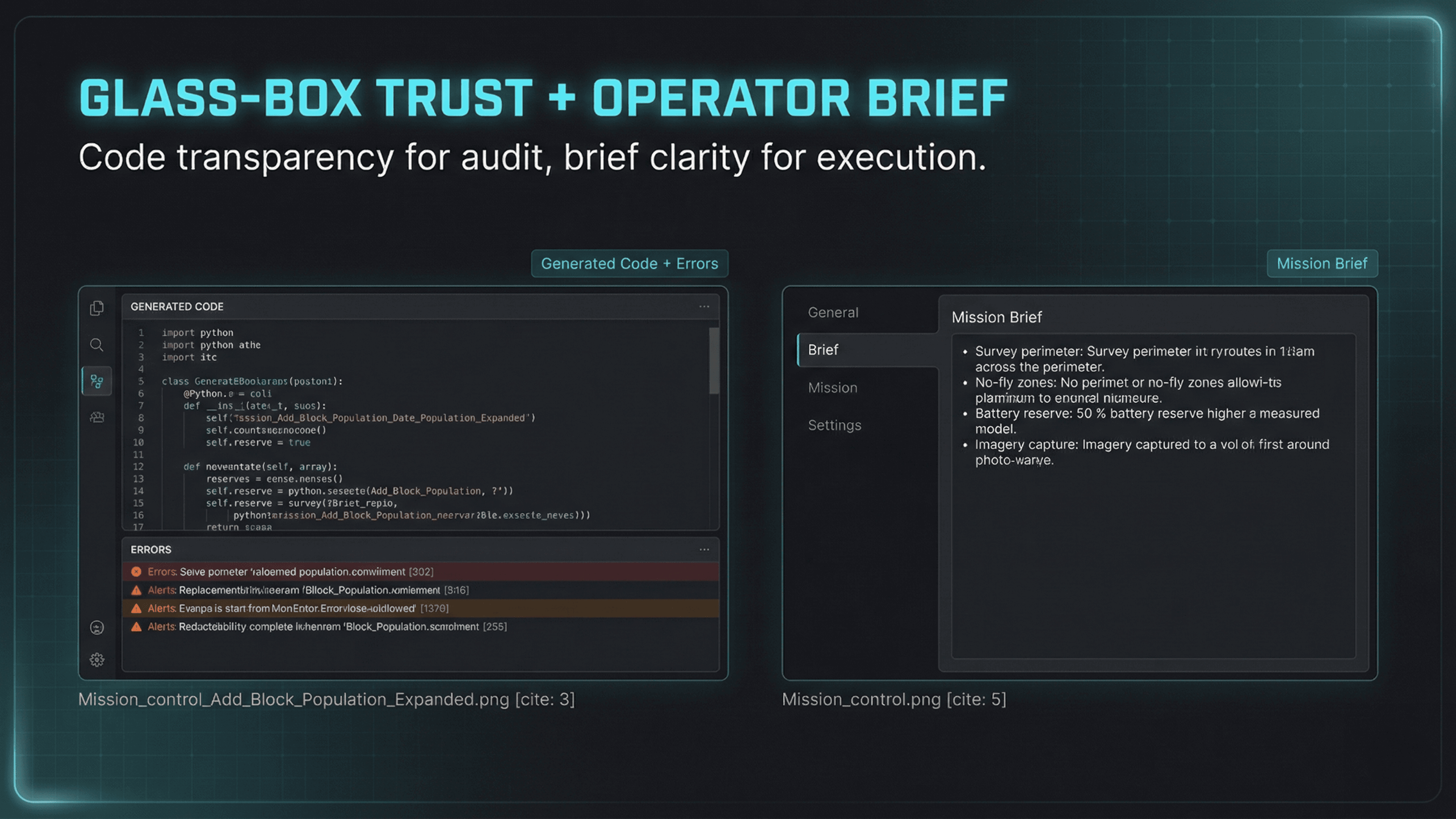
This HMI replaces syntax with structure. Operators build missions as a spatial, chronological canvas split into Preflight, Flight, and Return. Safety constraints are configured through an inspector-driven rule builder using readable condition chips, while the mission’s health is communicated through color-coded connector paths (normal, warning, critical). A persistent preflight validation bar blocks deployment until critical checks are resolved. For transparency, the system exposes generated code and surfaces actionable error states alongside a human-readable mission brief, allowing operators to align objectives, constraints, and failsafes before execution.


Key highlights:

  • Phase-based mission canvas for rapid state parsing

  • Inspector-driven safety logic and inline condition visibility

  • Risk mapping via connector colors for instant failure localization

  • Preflight validation gating before deployment

  • Glass-box generated code + errors for trust and audit

  • Mission brief for fast pre-mission alignment

Smooth Scroll
This will hide itself!
Mission Control: Operator-First Drone (No-Code) HMI
OVERVIEW

Mission Control is a high-stakes, operator-first Human Machine Interface for planning and validating autonomous drone missions without writing code. It turns complex mission logic into a phase-based visual flow (Preflight, Flight, Return), where safety risks are visible instantly through color-coded paths. The system pairs visual orchestration with inspector-built rules, real-time error surfacing, and a glass-box view of generated code for auditability.

YEAR

2025

ROLE

  • HMI and UI/UX Designer (End-to-end)

  • Owned information architecture

  • Interaction design

  • Visual system

  • Safety-first logic patterns

  • Component styling

  • high-fidelity UI screens for the mission orchestration dashboard.

SERVICES

  • HMI Design

  • UI/UX Design

  • Interaction Design

  • Information Architecture

  • Design System and Components

  • High-Fidelity Prototyping

About the project

Mission Control is designed for environments where seconds matter and failure cannot be hidden in logs. Traditional code-first mission tools increase cognitive load by forcing operators to read syntax, switch panels, and hunt for failures under pressure.

This HMI replaces syntax with structure. Operators build missions as a spatial, chronological canvas split into Preflight, Flight, and Return. Safety constraints are configured through an inspector-driven rule builder using readable condition chips, while the mission’s health is communicated through color-coded connector paths (normal, warning, critical). A persistent preflight validation bar blocks deployment until critical checks are resolved. For transparency, the system exposes generated code and surfaces actionable error states alongside a human-readable mission brief, allowing operators to align objectives, constraints, and failsafes before execution.


Key highlights:

  • Phase-based mission canvas for rapid state parsing

  • Inspector-driven safety logic and inline condition visibility

  • Risk mapping via connector colors for instant failure localization

  • Preflight validation gating before deployment

  • Glass-box generated code + errors for trust and audit

  • Mission brief for fast pre-mission alignment

Smooth Scroll
This will hide itself!
Mission Control: Operator-First Drone (No-Code) HMI
OVERVIEW

Mission Control is a high-stakes, operator-first Human Machine Interface for planning and validating autonomous drone missions without writing code. It turns complex mission logic into a phase-based visual flow (Preflight, Flight, Return), where safety risks are visible instantly through color-coded paths. The system pairs visual orchestration with inspector-built rules, real-time error surfacing, and a glass-box view of generated code for auditability.

YEAR

2025

ROLE

  • HMI and UI/UX Designer (End-to-end)

  • Owned information architecture

  • Interaction design

  • Visual system

  • Safety-first logic patterns

  • Component styling

  • high-fidelity UI screens for the mission orchestration dashboard.

SERVICES

  • HMI Design

  • UI/UX Design

  • Interaction Design

  • Information Architecture

  • Design System and Components

  • High-Fidelity Prototyping

About the project

Mission Control is designed for environments where seconds matter and failure cannot be hidden in logs. Traditional code-first mission tools increase cognitive load by forcing operators to read syntax, switch panels, and hunt for failures under pressure.

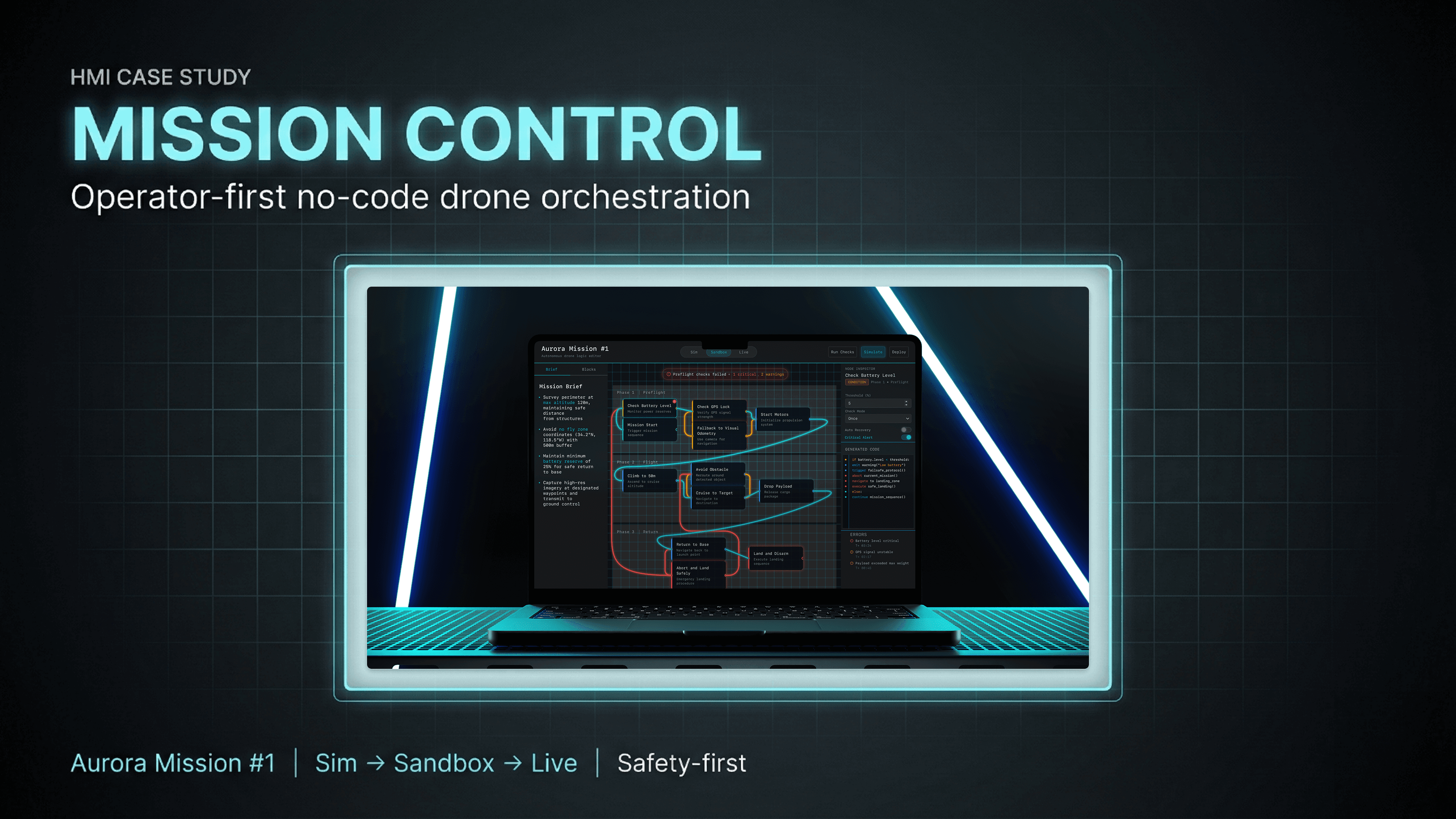
This HMI replaces syntax with structure. Operators build missions as a spatial, chronological canvas split into Preflight, Flight, and Return. Safety constraints are configured through an inspector-driven rule builder using readable condition chips, while the mission’s health is communicated through color-coded connector paths (normal, warning, critical). A persistent preflight validation bar blocks deployment until critical checks are resolved. For transparency, the system exposes generated code and surfaces actionable error states alongside a human-readable mission brief, allowing operators to align objectives, constraints, and failsafes before execution.


Key highlights:

  • Phase-based mission canvas for rapid state parsing

  • Inspector-driven safety logic and inline condition visibility

  • Risk mapping via connector colors for instant failure localization

  • Preflight validation gating before deployment

  • Glass-box generated code + errors for trust and audit

  • Mission brief for fast pre-mission alignment

Smooth Scroll
This will hide itself!